
Fragrance is more than just a pleasant scent—it is an invisible accessory that defines personality, mood, and confidence. But one of the biggest frustrations perfume lovers face is perfume’s longevity. So, why does some perfume last longer then other?
The answer lies in the science, composition, and even personal habits. In this guide, we’ll explore the main factors that affect perfume longevity and also provide tips on how to make your favorite perfumes last longer.
1. Does a perfume oil concentration impact perfume’s longevity?
The concentration of perfume oils is the most important factor in determining how long a fragrance lasts. Perfumes are created by mixing fragrance oils with ethyl alcohol and sometimes water. The higher the oil concentration, the longer the scent remains noticeable.
Here are the common categories:
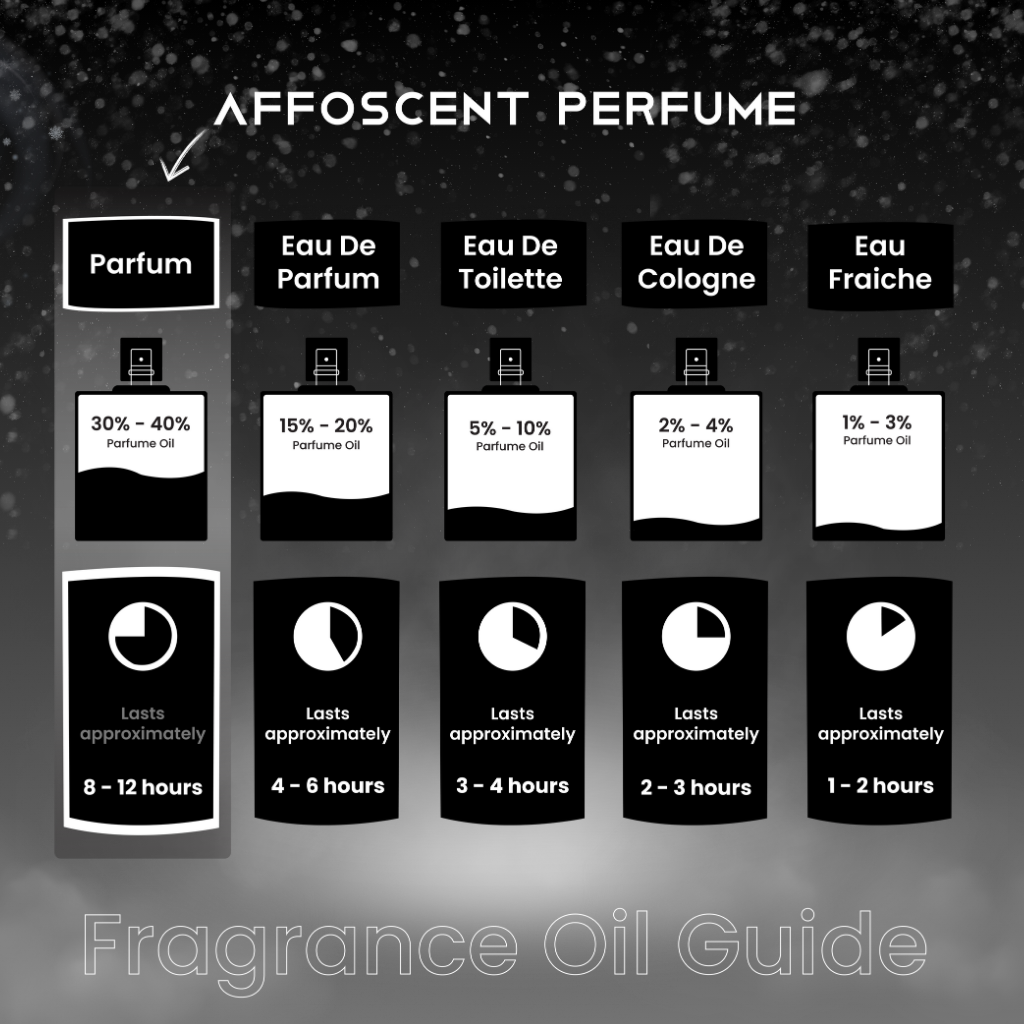
- Eau de Cologne (EDC) – Contains around 2–4% oils. Light, refreshing, but fades within 2–3 hours. Often used in summer or for quick freshness.
- Eau de Toilette (EDT) – 5–15% oils. This is the most popular daily wear option. It lasts about 3–4 hours and is widely found in both perfumes for women and men.
- Eau de Parfum (EDP) – 15–20% oils. Stronger, richer, and more intense. Longevity is 4–6 hours. Most of perfumes available in market are into this category.
- Parfum/Extrait de Parfum – 20–40% oils. Highly concentrated, luxurious, and long-lasting, often staying on the skin for 8-12 hours or more. Affoscent’s all the perfumes fall into this category, which mean our products last highest.
If you’re looking for longevity, always consider EDP or Parfum, as they provide excellent value for fragrance lovers who want their scent to last all day.
2. The role of perfume notes
Every perfume has three layers of notes—top, middle (heart), and base. These notes determine how the fragrance develops and how long it stays.
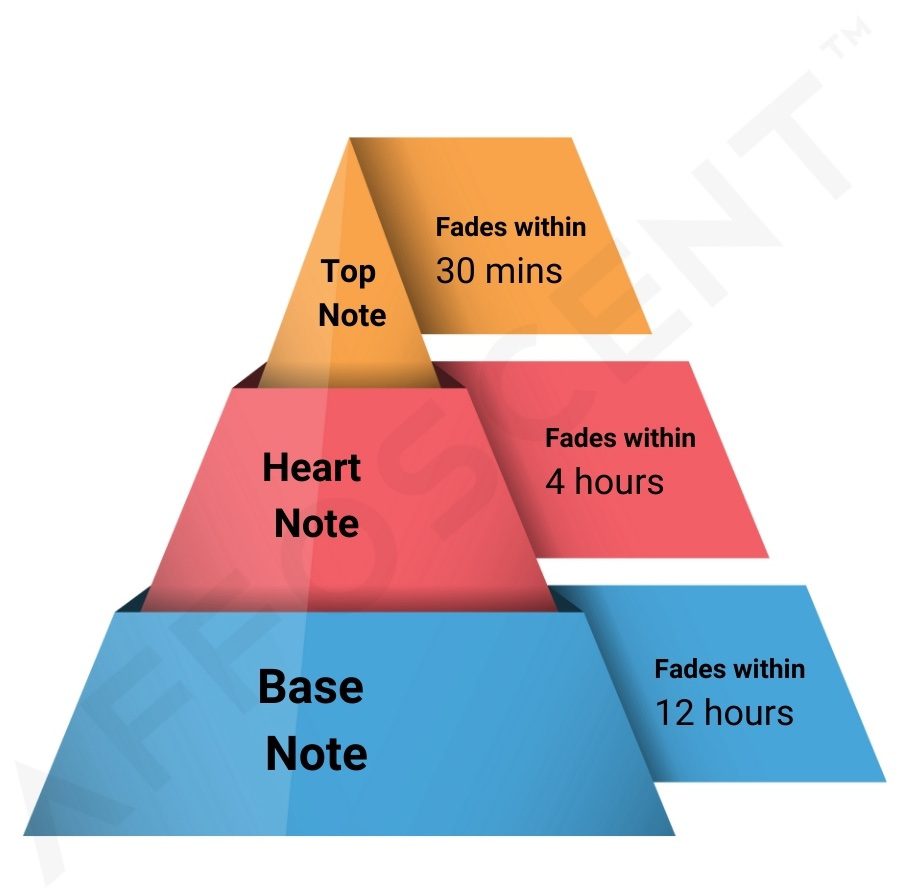
- Top Notes: The opening impression of a perfume. These are the first scents you notice immediately after application, but they evaporate quickly—usually within a few minutes.
- Middle Notes (Heart Notes): The core of the fragrance. These notes emerge once the top notes fade and form the most prominent character of the perfume, lasting for several hours.
- Base Notes: The foundation of the fragrance. Made up of the heaviest ingredients, these notes develop slowly and linger for many hours, providing depth and longevity without being overpowering.
Perfumes rich in woody, musky, or oriental bases last longer compared to light, citrus-heavy fragrances. This is why luxury perfumes for men often use oud, sandalwood, or leather, while many perfumes for women include musk, amber, or vanilla to extend wear.
3. Ingredients that make perfumes last longer
Not all ingredients are created equal. Some are naturally strong and last longer on the skin.
- Long-lasting ingredients: Oud, amber, patchouli, sandalwood, musk, vanilla.
- Moderate ingredients: Jasmine, rose, spices, green notes.
- Quick-fading ingredients: Lemon, bergamot, aquatic accords.
For example, a unisex perfume built around oud and amber can last all day, while a fresh oceanic scent may disappear in a few hours.
4. How skin type and body chemistry affects perfume performance
Perfume interacts with each person differently. The same fragrance may smell long-lasting on one person but fade quickly on another.
- Oily skin: Holds perfume better, making it last longer.
- Dry skin: Perfume tends to evaporate faster.
- Body temperature: Warmer skin projects scent more but may burn it off quickly.
This is why perfumes can vary in longevity depending on who wears them. Choosing perfumes with strong base notes is the best way to overcome skin chemistry differences.
5. Perfume application techniques that increase longevity
How you apply perfume matters as much as the perfume you choose.
Best Ways to Apply:
- Moisture your skin properly before applying perfume.
- Apply on pulse points: wrists, neck, behind ears, inner elbows.
- Do not rub after spraying—this crushes the fragrance molecules.
- Spray on clothes for extended wear (but avoid delicate fabrics).
- Layering with matching body lotion or oil enhances longevity.
For those who want their perfumes to last throughout the day, correct application is as important as the perfume itself.
6. Environment and climate
Weather conditions also impact perfume longevity.
- Hot weather: Perfumes evaporate faster. Lighter, fresh scents like citrus or aquatic notes work better.
- Cold weather: Stronger perfumes with wood, amber, and spice last longer and feel comforting.
This is why many fragrance enthusiasts own multiple bottles—lighter perfumes for winters and intense perfume for summer, and deeper, richer luxury perfumes for special occasions.
7. How to store perfumes to maintain their longevity
Even the best perfume will lose its strength if not stored properly. Heat, humidity, and direct sunlight break down fragrance molecules.
Best Storage Practices:
- Store bottles in a cool & dark place.
- Keep caps tightly closed.
- Avoid leaving bottles in bathrooms.
A well-preserved perfume for men & women can maintain its quality for years, while poor storage can make it weak and short-lived.
8. Natural vs. synthetic ingredients
Natural essential oils are beautiful but often less stable than synthetic molecules. For example, citrus oils are vibrant but fade fast. Synthetic ingredients, on the other hand, are designed to last longer and maintain consistency.
This is why many perfumes are blend with natural and synthetic components—to balance richness with longevity.
9. Perfume Categories with Best Longevity
If your main priority is longevity, here are some perfume categories to explore:
- Woody perfumes: Sandalwood, cedarwood, oud for strong performance.
- Leather perfumes: Found in many luxury perfumes for men.
- Aromatic perfumes: Rich, warm, and long-lasting.
- Gourmand perfumes: Vanilla, chocolate, caramel notes, common in perfumes for women.
These categories often outperform citrus or green perfumes when it comes to lasting power.
10. Tips to Make Perfume Last Longer
To get the best performance from your fragrance:
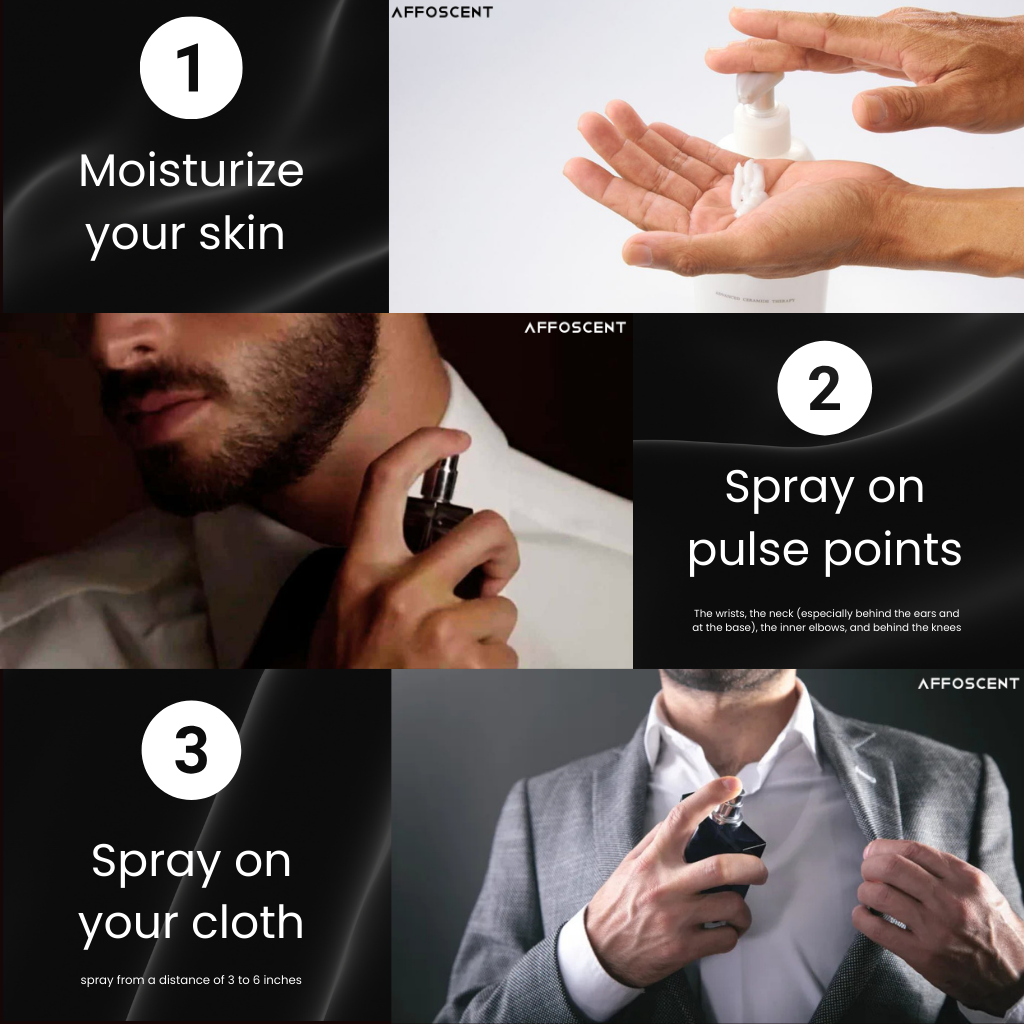
- Moisturize your skin before applying.
- Apply after a shower when pores are open.
- Spray from 6–8 inches away for even coverage.
- Reapply lightly during the day if needed.
- Keep a travel-size bottle for touch-ups (that is why give 5ml atomiser free with every 100ml bottle).
Whether you’re wearing luxury perfumes for men, elegant perfumes for women, or unisex perfumes, these habits ensure your fragrance stays with you for hours.
Conclusion
Perfume longevity is influenced by concentration, ingredients, skin chemistry, climate, and storage. By understanding these factors, you can make smarter choices and enjoy fragrances that truly last.
If you want a scent that stays with you all day, look for Eau de Parfum or Parfum, choose perfumes with deep woody or musky notes, and apply them correctly.
Perfume isn’t just about smelling good, it’s about creating a signature aura that lingers wherever you go – so choose wisely!


